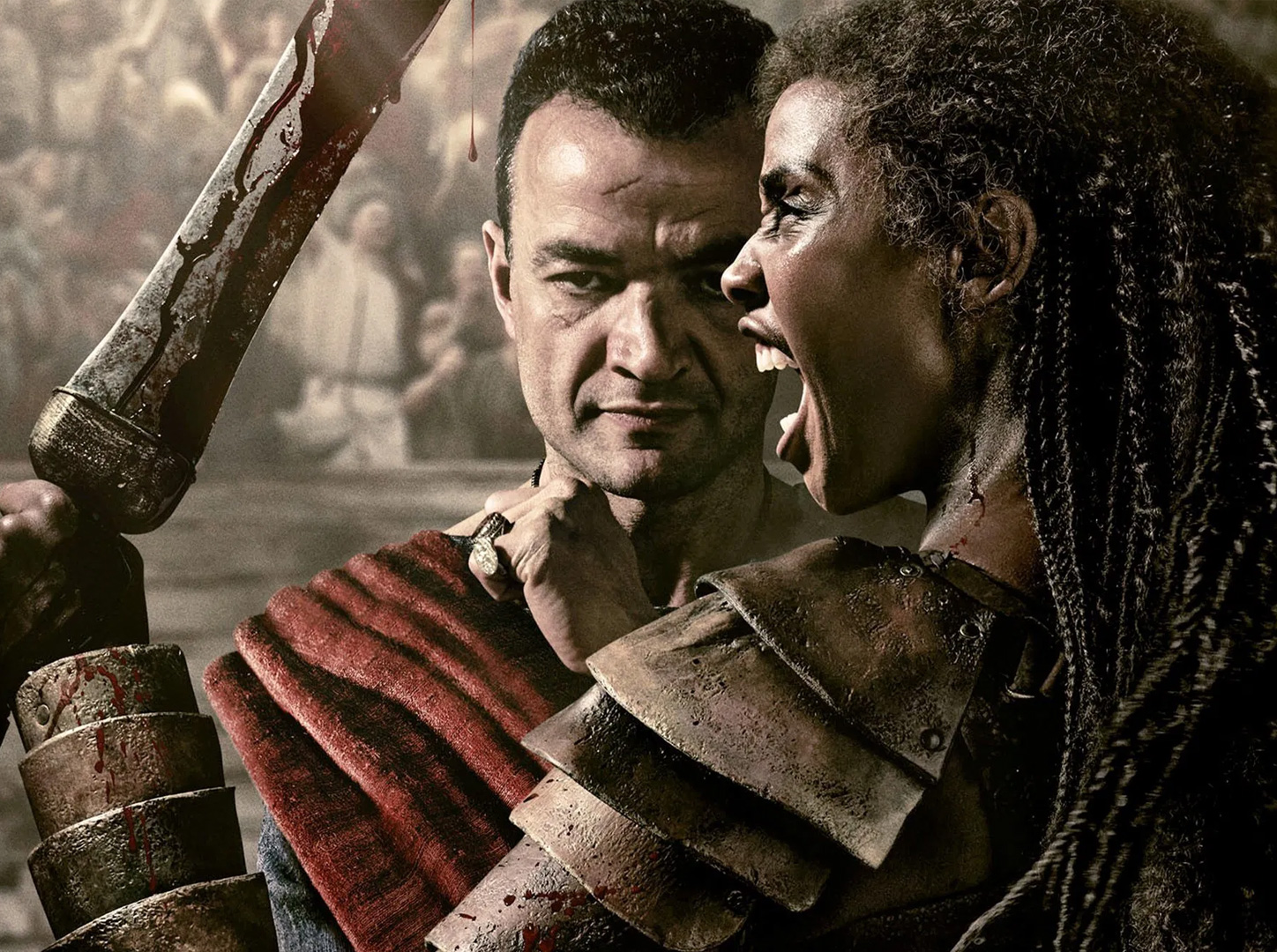
Before Game of Thrones, there was Spartacus – returning to the arena with Spartacus: House of Ashur to show us how it’s done.

What if Ned Stark dodged the guillotine in Game of Thrones? What if Walter White never got diagnosed with cancer in Breaking Bad? What if Hannibal took up a plant-based diet? Excluding Marvel, whose wobbly attempts to chase multiverses went full ouroboros, most self-respecting franchises wouldn’t be so shameless as to base an entire spinoff show on a what-if-ism nobody asked for.
But most shows aren’t Spartacus, Starz’s gut-n-morning-glory take on the vicious world of gladiatorial combat. With a heavy emphasis on graphic gore, poetic potty-mouths, and never-ending nudity, shamelessness is a natural part of the series’ 15-year-strong appeal.
House of Ashur brings back Nick E Tarabay as Dominus Ashur, who’s briefly reunited with Lucy Lawless’s Lucretia in the afterlife. She ponders the question: what if Ashur didn’t get his head lobbed off in Vengeance, became the man who killed Spartacus, and ended the slave revolution?
And then, boom, Ashur wakes up in this whole new alternative timeline in a lavish bed, post-threesome, with his two lovers asking what’s startled him. He doesn’t bother explaining. Fair enough.
As the new owner of the former House of Batiatus, this Ashur variant has work to do training a new stock of fighters. Little time’s wasted getting to the gory stuff, with Ashur going alpha on one of his lippy warriors and showing his experience as a former gladiator. Light spoiler: he turns that man’s face into tomato purée.

The proper battles are even more brutal, which is an endorsement for a series that always relished in them. Continuing to use the 300 playbook for creating action set-pieces, the golden sheen and slow-motion stylisations are used sparingly but effectively for the gnarliest moments. Zack Snyder should take notes.
While it’s messed up to think cold-blooded murder was once a celebrated sport, the show still knows how to create an arena atmosphere. Crowds roar, victors showboat, and drums beat with a power that makes you feel like you’re part of the spectacle.
It’s no fun for the dead, though, who get thrown into a pile like rotten meat right next to one of Ashur’s warriors. Not keen on being the cherry on top of that death cake, this man secretly considers following in the footsteps of Spartacus and starting a new revolution.

Other gladiators, meanwhile, embrace the combat, the glory, and the chance of freedom from slavery. Right-hand-man Korris (Graham McTavish) shares his admiration for one such warrior. “Shall I seek to arrange for you to swallow his cock upon contest’s end,” Ashur mocks. “The man stands unrivalled upon the sands,” Korris retorts in his thick Scottish accent. “It would be an honour to drink such potent a blessing.”
This is trailer park Shakespeare at its trashiest, and as that little passage of dialogue shows, House of Ashur continues to wear that trait like a solid gold crotch plate. The exchanges become particularly fanciful when Ashur hobnobs it with higher houses in his attempt to win political power.

Nothing reminded me more of the first season of Spartacus, however, than the copious shots of oiled-up dudes, ripped to the high heavens, torsos tensed, some with their dicks hanging all out. There aren’t enough months on an X-rated calendar for all these portraits.
But there is space for one woman, Achillia (Tenika Davis), in the Ashur line-up, despite the initial distaste in the room when Ashur presents the idea. After witnessing three little men rip it up and win the crowd’s favour, Ashur sees Achillia as the right kind of outlier to make his house stand out.
Achilla, understandably, would rather die than be a slave, but when she learns how Ashur and Korris won their freedom as gladiators, she wonders if she could do the same.

Between Ashur’s desire for political dominance, Achilla’s literal fight for freedom, and whispers of another revolution circulating the gladiatorial locker rooms, House of Ashur has set up plenty of powder kegs to justify its alt-history plot. The story is, of course, still the bones to the true meat of the show: its signature use of violence, vulgarity, and voyeurism.
If future episodes continue to milk the series’ most shamelessly iconic traits, then it would be an honour to drink such potent a blessing.