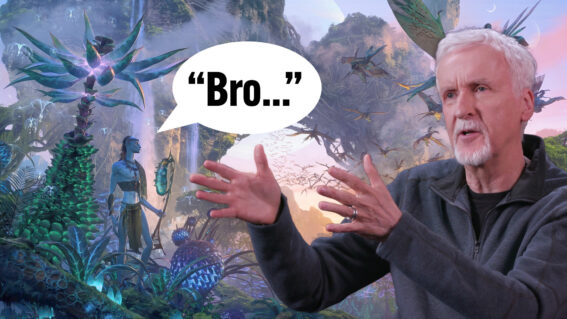
James Cameron has garnered a reputation, solidified over many years, for being not just a gifted storyteller but an innovator, pushing the boundaries of cinematic technology. From his early use of CGI in The Terminator to the full-scale sets and vast water tanks of Titanic, to the pioneering performance-capture systems and virtual cameras developed for Avatar, Cameron has repeatedly positioned himself at the vanguard as both artist and technologist.
The blockbuster auteur’s new movie, Avatar: Fire and Ash, is as spit-polished as they come: a very long and very gloss-lacquered spectacle that unspools like the world’s most elaborate collection of screensavers. There’s a sense that every inch of the frame—every pixel, every render layer—has been beautified, optimised, re-optimised, beautified again in the editing suite, even basic dialogue scenes taking place in front of bling-filled backgrounds.
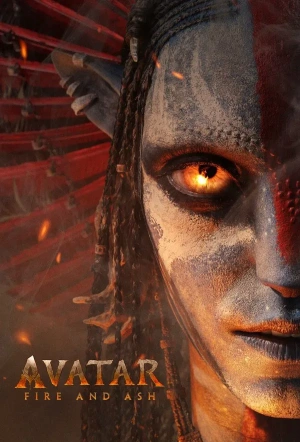
But do these kinds of eye-watering visuals still pack the same oomph? Is it just me, or are we less impressed by slickly rendered frames than we used to be? In the present moment, major disruptive technologies are chomping at the edges of the horizon like The Langoliers, bringing potential changes to motion picture storytelling that far eclipse the kind of special effects delivered in Fire and Ash. Perhaps this explains why once dazzling effects showcases no longer seem to land with the same pop.
Take, for example, the rise in artificial intelligence-powered video generation tools. This is a thorny issue for Hollywood, prevalent for instance in the 2023 writers’ strikes, with many in the entertainment industry understandably fearing the effects the technology will have on their bread and butter. 2025 was an amazing year for AI videos, which can now write, direct and speak, Google’s Velo 3 for instance now allowing users to create AI-generated videos with audio and dialogue.
A deluge of AI content arrived on social media, with nobody—not even someone as experienced in visual effects as Cameron—being able to reliably tell the difference between real and computer-generated people. That moment has gone. We didn’t inch past the famous “uncanny valley” effect—we rocketed through it.
Nobody knows what effect these tools will have on the entertainment industry. I think it will be profound, writing this piece earlier in the year comparing such innovations to the introduction of synchronised sound in the 1920s. Perhaps sensing the ground shifting beneath its feet, Disney earlier this month announced a $1bn, three-year deal with OpenAI, which includes licensing around 200 iconic characters. One should take official comments about such partnerships with a pinch of salt, given the industry’s fondness for hyperbole, but it does sound like there’ll be truth to CEO Bob Iger’s claim that this deal will place “imagination and creativity directly into the hands of Disney fans in ways we’ve never seen before.”
Cameron has spoken tactfully about AI, suggesting it can be used to help streamline production processes but shouldn’t replace humans, describing the idea of AI actors as “horrifying.” That may be so, but the future inevitably arrives whether anyone wants it to or not. Film festivals for AI content have begun to appear; it’s clear, in terms of narrative storytelling, that we’re currently in its embryonic period.
Fascinating developments are also happening in spatial computing, including virtual reality and mixed reality experiences. Cameron was a major proponent behind Hollywood’s most recent 3D glasses technology, which is virtually non-existent nowadays, but the idea lives on—of filling the space between the viewer and the screen, thus offering more immersive content.
This is the core feature of VR and MR headsets, which corporations including Meta, Apple and Samsung continue to heavily invest in. The tech may not have “gone mainstream”, but it’s still relatively new—consumer headsets have only been available on the mass-market since 2016—and quickly evolving. The tech is also extraordinarily impressive: last year I spent a week at the Venice Immersive section of the Venice Film Festival, on a tiny island filled with VR productions, and encountered some of the most mind-melting art I’ve ever experienced.
After Meta demoed its technology to Cameron in 2024, the director was “amazed by its transformational potential and power” and “convinced we’re at a true, historic inflection point.” Cameron and his Lightstorm Vision venture inked a deal with Meta to, in his words, “revolutionize ALL visual media,” promising big changes to films, sports, and new content from major IP. Time will tell, of course, what actually emerges from that partnership.
But the truth is that traditional movie-making techniques, no matter how cutting-edge, are no longer where the real innovation—the profound shifts and creative upheavals—in motion picture storytelling are happening. In the context of the aforementioned Langoliers—those revolutionary, potentially tectonic plate-shifting emerging technologies—the motion capture suits and virtual cameras in Avatar seem almost retro. Motion picture pioneers of the future will be drawing from a very different playbook.