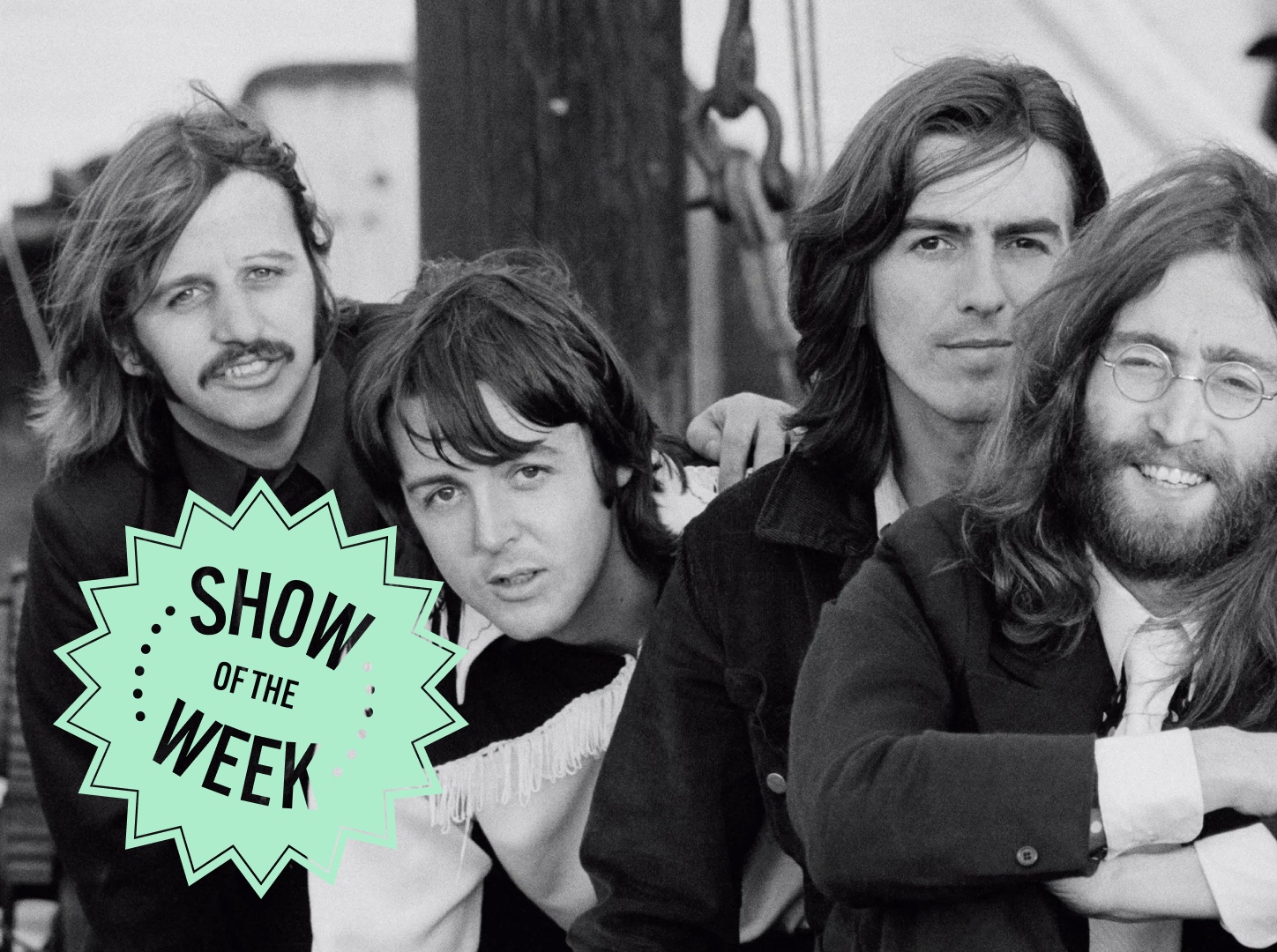
You can barely move for Beatles content these days. If people aren’t busy photoshopping moustaches and bowl cuts onto the cast of the upcoming quartet of Beatles biopics (Paul Mescal is Paul McCartney, Harris Dickinson is John Lennon, Barry Keoghan is Ringo Starr, Joseph Quinn is George Harrison), then they’re still basking in the afterglow of Peter Jackson’s 2022 Get Back series, which remastered and “de-noised” footage shot by director Michael Lindsay-Hogg during the recording of the band’s final, 1970 album Let It Be. That, or it’s the more recent Beatles ’64, directed David Tedeschi and produced by Martin Scorsese, which covers the band’s first visit to the United States.

Let’s be honest, now. It’s time to accept that we’ve perhaps run out of things to say about the Fab Four. Disney+’s release of The Beatles Anthology proves that point. It’s a remastered edition of the already definitive 1995 documentary series directed by Geoff Wonfor and Bob Smeaton, originally broadcast on ITV in the UK as three episodes and then released as eight on VHS and LaserDisc.
Aha! But, this time around, there’s a new, ninth episode. Yet, despite its plentiful (and very lovely) footage of the then-surviving members Paul, George, and Ringo (Harrison died in 2001), sitting out on the grass and strumming the ukulele, it’s a supposed behind-the-scenes look at the making of the series that doesn’t actually tell us anything we haven’t already gathered from the previous eight hours. And the footage itself, which includes the recording of Lennon’s demos “Free As A Bird” and “Real Love” and the attempted recording of “Now and Then” (eventually released in 2023), has largely already been released to the public.

As McCartney explains in episode nine, the motivation for the series was to tell the Beatles story “from the inside out rather than the outside in”. Of course it was, there’s no other way to look at it—it’s a rosy depiction of the band, but not exactly hagiography, because the entire thing is constructed out of their own voices (Lennon’s contributions are provided through carefully curated archive interviews). Beyond them, there’s only a handful of their closest collaborators, including the head of their company Apple Corps, Neil Aspinall, and record producer George Martin. Both have been called the “fifth Beatle”.
You certainly don’t hear from any of the women in their lives. Was the fear that they might say something a little too contradictory to these men’s own image of themselves as eternally plucky and innocent? Here, they’re merely boys freshly touched down in Hamburg, with almost no sexual experience and suddenly surrounded by exotic dancers, or they’re Starr smoking weed for the first time under the auspices of Bob Dylan.
And yet, The Beatles Anthology is definitive because there will never be a truer story than the one from the horse’s mouth, even if Harrison, in the ninth episode, admits there are conflicting accounts between the four of them. No one can decide whether they were high or not when they received their MBEs from the Queen.
The Beatles deluge came after the Anthology. When it first aired, not only had the band’s cultural cachet waned in the intervening post-breakup years, but its very concept—all that footage, cut and collated with such vitality—had never been attempted with the band before. And it really is masterfully constructed, from the claustrophobic montages of Beatlemania to the slow crawl around the empty club floor of Liverpool’s The Jacaranda, where the band performed some of their earliest gigs.

I thought, watching it, of McCartney’s own descriptions of seeing The Girl Can’t Help It (1956) for the first time: the boxed black and white exploding into colourful widescreen and, there, sashaying into view, Jayne Mansfield. The Anthology goes some way to capture what it was like for these men, born out of the fire and brimstone of World War II, working class and forever proudly so, to be catapulted into a kind of ecstatic omnipotence that maybe only Elvis could understand, if Elvis hadn’t tried to get them banned from America.
The Disney+ revamp has its obvious sells, with an impressive restoration of both video and audio. But, even if the stories now, repeated ad nauseam, have lost some of their shine, the impression of what life must be like at that level of fame—where the only peace you get is alone in the bathroom—still comes through. As does the feeling of experiencing all that insanity with three other people there. It doesn’t even matter what you think of The Beatles, really. Because this is a psychological portrait like no other.